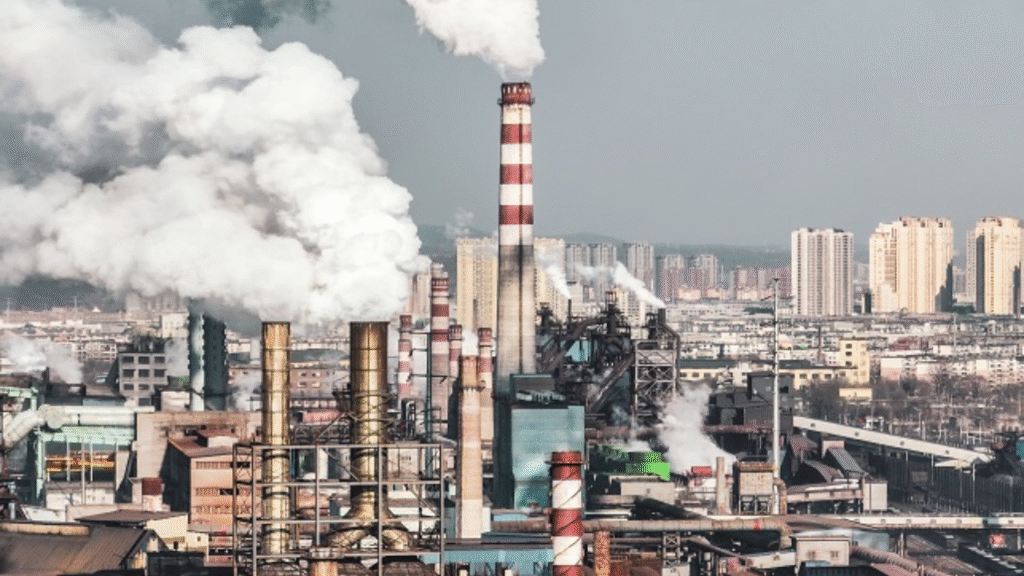
Environmental regulation plays a crucial role in balancing economic growth with ecological sustainability. Developing and developed nations face the challenge of ensuring that industries comply with environmental laws without losing competitiveness in the global market. Regulations often involve emission limits, pollution control standards, waste management protocols, and resource efficiency targets. While such measures protect natural ecosystems and public health, they also influence costs, innovation, and productivity within industries. The interaction between regulatory stringency and industrial performance defines how nations pursue sustainable economic development.
Table of Contents
Meaning and Importance of Environmental Regulation
- Environmental regulation refers to laws and standards designed to limit industrial pollution and manage natural resources responsibly.
- The purpose includes protecting air, water, and soil from industrial degradation.
- Relevance in policy: Governments use environmental policies to guide sustainable industrial behavior.
- Long-term benefits: Healthier populations, renewable resource usage, and improved environmental quality support overall economic growth.
- Strategic role: Regulation can stimulate innovation in cleaner technologies and improve energy efficiency.
Industrial Competitiveness and Its Dimensions
- Industrial competitiveness represents a nation’s ability to produce goods efficiently and sell them in global markets.
- Key components: productivity, innovation, cost efficiency, and export performance.
- Policy relevance: Competitiveness ensures sustainable employment and national income growth.
- Measurement indicators: manufacturing output, technological capability, trade performance, and foreign investment.
Relationship Between Environmental Regulation and Competitiveness
- Cost implications: Compliance with environmental standards increases short-term production costs for industries.
- Innovation effect: Stringent regulations can push firms to develop energy-efficient and cleaner production processes.
- Market advantage: Environmentally responsible companies gain access to “green markets” and attract eco-conscious consumers.
- Productivity trade-offs: Regulation may initially reduce output efficiency but often improves long-term competitiveness through technological upgrades.
- International image: Nations with strong environmental compliance often attract foreign investment due to stable regulatory environments.
Major Types of Environmental Regulations
| Type of Regulation | Description | Impact on Industry | Example |
|---|---|---|---|
| Command-and-Control Regulations | Government sets strict limits on emissions and discharges. | Increases compliance cost but ensures accountability. | EU Industrial Emissions Directive. |
| Market-Based Instruments | Uses taxes, permits, or trading systems to control pollution. | Encourages cost-effective pollution reduction. | Carbon trading under the Kyoto Protocol. |
| Voluntary Standards and Certifications | Industries adopt eco-labels or self-regulation programs. | Improves reputation and customer trust. | ISO 14001 environmental management systems. |
| Information Disclosure Policies | Requires public reporting of emissions or resource use. | Promotes transparency and social accountability. | Pollutant Release and Transfer Registers (PRTRs). |
| Subsidies and Incentives | Financial support for green technology adoption. | Reduces cost burden and encourages innovation. | Renewable energy subsidies and tax rebates. |
The Porter Hypothesis and Innovation
- Concept origin: Proposed by economist Michael Porter, this hypothesis suggests that well-designed environmental regulations can enhance competitiveness by fostering innovation.
- Innovation trigger: Firms innovate to comply efficiently with regulations, leading to cost savings and new market opportunities.
- Empirical evidence: Studies show that firms investing in green technology often outperform peers in the long term.
- Policy implication: Policymakers can design “smart regulations” that stimulate creativity rather than impose excessive costs.
Positive Effects of Environmental Regulation on Industry
- Technological advancement: Regulation encourages the development of cleaner and more efficient technologies.
- Improved energy use: Firms adopt renewable energy and optimize resource management.
- Brand differentiation: Eco-friendly products attract customers and open export markets.
- Reduced waste: Efficient production lowers material costs and enhances sustainability.
- Public support: Environmentally responsible industries gain social approval and political backing.
Challenges Faced by Industries Under Environmental Regulation
- High compliance costs: Small and medium enterprises often struggle with technological adaptation.
- Reduced short-term profits: Initial investment in pollution control equipment can affect profitability.
- Complex regulatory frameworks: Overlapping national and international laws increase administrative burden.
- Global competition pressure: Firms in less-regulated countries might enjoy cost advantages.
- Uncertainty in policy enforcement: Inconsistent regulations create market instability.
Comparative Impact Across Sectors
| Industry Sector | Regulatory Sensitivity | Challenges | Opportunities |
|---|---|---|---|
| Manufacturing | High | Waste disposal, energy consumption | Resource-efficient production and recycling. |
| Energy and Mining | Very High | Carbon emissions and resource depletion | Renewable energy transition and innovation. |
| Agriculture | Medium | Fertilizer and pesticide restrictions | Organic farming and sustainable practices. |
| Textiles | High | Water pollution and dye management | Eco-friendly materials and low-impact dyes. |
| Automobile | High | Emission norms and fuel efficiency standards | Electric and hybrid vehicle innovation. |
Case Studies on Regulation and Competitiveness
- Germany: Environmental regulation has promoted technological innovation, making the nation a global leader in green manufacturing.
- Japan: Energy efficiency standards have improved industrial productivity and export competitiveness.
- China: Recent environmental policies have shifted industrial priorities toward sustainable development.
- India: Implementation of pollution control boards and green manufacturing incentives is improving environmental compliance among industries.
Balancing Regulation and Competitiveness
- Flexible policy design: Regulations should adapt to industry-specific conditions.
- Public-private collaboration: Joint innovation initiatives can reduce compliance costs.
- Capacity building: Training and subsidies can help small industries meet standards.
- Global cooperation: Harmonizing international standards prevents competitive disadvantage.
- Long-term planning: Gradual enforcement allows industries to adjust effectively.
Technological Adaptation and Green Competitiveness
- Digital monitoring systems track emissions in real-time, improving transparency.
- Circular economy models reduce waste and enhance material efficiency.
- Green innovation funding supports research into low-carbon technologies.
- Automation and AI tools optimize industrial energy consumption.
- Sustainable supply chains minimize environmental footprint and boost reputation.
Policy Recommendations for Sustainable Competitiveness
- Design adaptive regulations that combine incentives and accountability.
- Encourage R&D investments in green technologies through tax benefits.
- Facilitate international partnerships for technology transfer.
- Strengthen institutional frameworks for monitoring and enforcement.
- Promote education and awareness about sustainable production methods.
Future Outlook
- Integration of ESG metrics: Environmental, Social, and Governance indicators guide industrial policy and investment decisions.
- Expansion of green markets: Global demand for sustainable goods will reward environmentally compliant firms.
- Digital transformation: Smart technologies will enhance compliance efficiency.
- Sustainability as a competitive edge: Future industries will integrate environmental goals as part of their growth strategy.
Last Words
Environmental regulation and industrial competitiveness are not opposing forces but complementary components of sustainable development. When implemented wisely, regulation stimulates innovation, improves resource efficiency, and enhances long-term profitability. The balance between protecting the environment and maintaining industrial strength requires adaptive policies, technological investment, and global cooperation. As nations move toward greener economies, competitiveness will increasingly depend on an industry’s ability to align economic performance with environmental responsibility.