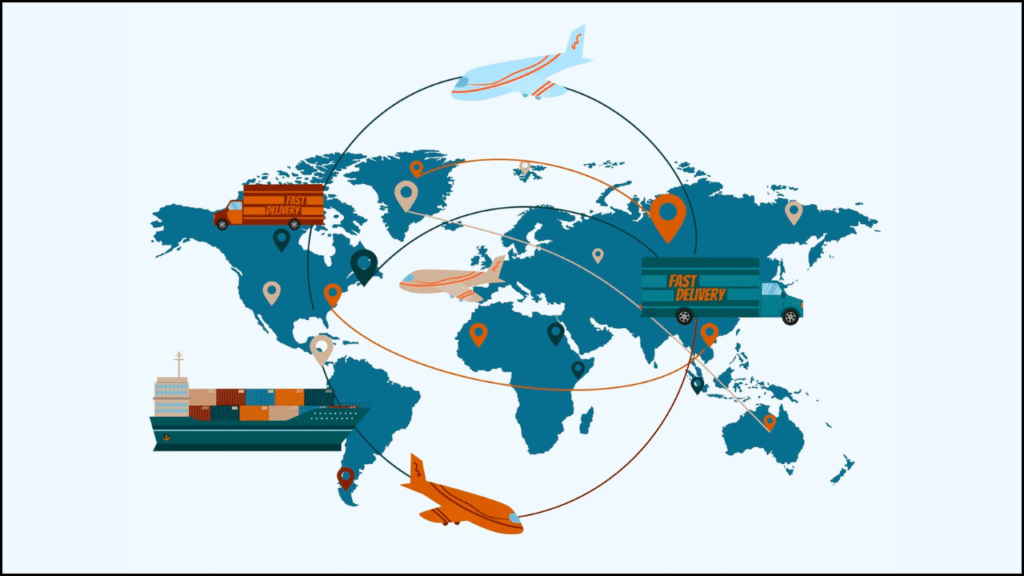
Global supply chains represent the backbone of modern economic activity, linking producers, suppliers, and consumers across continents. These complex networks enable efficiency and innovation but also raise significant sustainability challenges related to resource use, labor conditions, and environmental impact. The integration of sustainable policy design into global supply chains is therefore crucial for achieving long-term economic and ecological balance. As nations and corporations navigate global markets, policy frameworks that promote ethical sourcing, low-carbon logistics, and circular production systems become key instruments in shaping a sustainable future.
Table of Contents
Understanding Global Supply Chains
A global supply chain refers to the network of production, distribution, and delivery systems that span multiple countries.
It includes raw material extraction, manufacturing, transport, warehousing, and retail.
Technological advances in communication and logistics have enabled global interdependence among businesses.
Sustainability in supply chains now extends beyond environmental responsibility to include social equity and governance transparency.
Key Features of Global Supply Chains
Feature
Description
Relevance to Sustainability
Global Integration
Operations spread across multiple nations.
Requires harmonized sustainability standards.
Outsourcing and Offshoring
Production shifted to countries with lower costs.
Raises labor and environmental concerns.
Just-in-Time Production
Lean inventory management for cost efficiency.
Vulnerable to disruptions and unsustainable resource pressure.
Digital Connectivity
Use of data analytics and IoT for logistics.
Enhances transparency and traceability.
Trade Interdependence
Economic reliance among nations.
Encourages collaborative sustainability goals.
Importance of Sustainable Policy Design in Supply Chains
Ensures resource efficiency and waste reduction throughout production cycles.
Promotes fair labor practices and reduces exploitation.
Strengthens resilience to global disruptions such as pandemics or geopolitical conflicts.
Enhances brand reputation and consumer trust.
Supports international commitments like the UN Sustainable Development Goals (SDGs) and Paris Climate Agreement.
Environmental Dimensions of Sustainable Supply Chains
Aspect
Policy Objective
Expected Outcome
Carbon Emissions
Implement carbon pricing and emission caps.
Reduced greenhouse gas emissions from logistics.
Energy Efficiency
Promote renewable energy in manufacturing.
Lower operational costs and pollution.
Waste Management
Encourage circular economy principles.
Increased recycling and reduced landfill waste.
Water Usage
Regulate industrial water withdrawal.
Sustainable freshwater management.
Biodiversity Protection
Prevent deforestation and habitat loss.
Preservation of ecosystems and natural capital.
Social and Ethical Dimensions
Labor rights form a crucial component of sustainable supply chain policies.
Policies ensure safe working conditions, gender equality, and fair wages.
Ethical sourcing frameworks promote respect for indigenous and local communities.
Transparency laws like the UK Modern Slavery Act and the EU Supply Chain Due Diligence Directive demand disclosure of labor practices.
Certification systems such as Fairtrade and SA8000 encourage accountability.
Economic and Strategic Benefits of Sustainable Supply Chains
Enhances long-term profitability through efficiency and innovation.
Reduces operational risks caused by supply disruptions or reputational damage.
Attracts socially responsible investors and customers.
Fosters competitiveness in markets by prioritizing green procurement.
Supports technological innovation in logistics, materials, and production.
Examples of Sustainable Policy Instruments for Supply Chains
Policy Instrument
Function
Example of Implementation
Carbon Border Adjustment
Applies tariffs based on carbon intensity of imports.
European Union’s CBAM.
Extended Producer Responsibility (EPR)
Holds producers accountable for end-of-life waste.
Electronics and packaging sectors.
Green Public Procurement
Government preference for eco-friendly goods.
Japan’s Sustainable Procurement Law.
Sustainability Reporting Standards
Mandates corporate disclosure of ESG performance.
Global Reporting Initiative (GRI) framework.
Supply Chain Due Diligence Laws
Requires transparency in sourcing and production.
German Supply Chain Act (2023).
Technological Enablers of Sustainable Supply Chains
Blockchain improves traceability, ensuring raw materials come from verified sources.
Internet of Things (IoT) sensors monitor emissions and resource use in real time.
Artificial Intelligence (AI) optimizes logistics routes to reduce carbon footprints.
Big Data Analytics predicts disruptions and enables proactive resource management.
Digital Twins simulate supply chain operations to assess sustainability impacts before implementation.
Challenges in Achieving Supply Chain Sustainability
Challenge
Description
Cost Constraints
Small and medium enterprises struggle to afford green technologies.
Data Gaps
Limited access to reliable environmental and social data across tiers.
Regulatory Fragmentation
Inconsistent sustainability standards across countries.
Consumer Awareness
Low demand for certified sustainable products in some regions.
Geopolitical Risks
Trade conflicts disrupt progress on cross-border green policies.
Case Studies of Sustainable Supply Chain Practices
Unilever implements a Sustainable Living Plan focusing on ethical sourcing and waste reduction.
Tesla promotes vertical integration to ensure responsible mining of battery materials.
Walmart engages suppliers through its Project Gigaton initiative to reduce emissions.
Nestlé invests in regenerative agriculture to secure a sustainable raw material supply.
IKEA uses renewable energy and recyclable materials across its logistics network.
Policy Frameworks Supporting Global Supply Chain Sustainability
Framework
Focus Area
Impact
Paris Climate Agreement
Emission reduction targets across sectors.
Encourages low-carbon manufacturing.
UN Sustainable Development Goals (SDGs)
Inclusive and sustainable industrialization.
Promotes social and environmental responsibility.
OECD Guidelines for Multinational Enterprises
Ethical conduct in global trade.
Strengthens compliance and governance.
ISO 14001
Environmental management systems.
Provides standardized benchmarks for sustainability.
Basel Convention
Control of hazardous waste movement.
Prevents environmental degradation in developing nations.
Strategies for Policymakers and Businesses
Align trade policies with sustainability goals to avoid conflicting priorities.
Provide tax incentives for green innovation and resource-efficient technologies.
Support small businesses in adopting sustainable practices through funding and training.
Encourage regional cooperation for harmonized environmental standards.
Develop robust data-sharing mechanisms for transparency across supply chains.
Comparison of Traditional vs. Sustainable Supply Chains
Aspect
Traditional Model
Sustainable Model
Focus
Cost reduction and speed.
Environmental and social responsibility.
Resource Use
Linear (produce–use–dispose).
Circular (reuse–recycle–regenerate).
Transparency
Limited visibility.
End-to-end traceability.
Compliance
Reactive regulation.
Proactive sustainability standards.
Resilience
Vulnerable to shocks.
Flexible and adaptive.
Future Directions for Sustainable Supply Chain Policy
Integration of climate resilience metrics into global trade agreements.
Development of cross-border green corridors for low-emission logistics.
Expansion of carbon-neutral shipping and renewable-powered transport networks.
Adoption of science-based targets for corporate sustainability commitments.
Encouragement of collaborative innovation platforms between governments and the private sector.
Policy Implications for Global Development
Sustainable supply chains contribute to inclusive growth by ensuring fair trade and ethical labor practices.
Policy harmonization across nations enhances regulatory efficiency and reduces compliance costs.
Green innovation boosts economic competitiveness while reducing environmental degradation.
Sustainable procurement creates market incentives for eco-friendly production.
Transparent supply chains reinforce global accountability in achieving climate and social goals.
Wrapping Up
Global supply chains have evolved into powerful drivers of both economic growth and environmental impact. The design of sustainable policies is now central to ensuring that these networks contribute positively to global development rather than exacerbate inequality or ecological decline. Integrating green technology, transparent governance, and ethical labor standards strengthens both resilience and competitiveness. As nations and corporations align their objectives with global sustainability frameworks, a new era of responsible and adaptive supply chains will emerge—one that balances prosperity with planetary stewardship.
She is a creative and dedicated content writer who loves turning ideas into clear and engaging stories. She writes blog posts and articles that connect with readers. She ensures every piece of content is well-structured and easy to understand. Her writing helps our brand share useful information and build strong relationships with our audience.