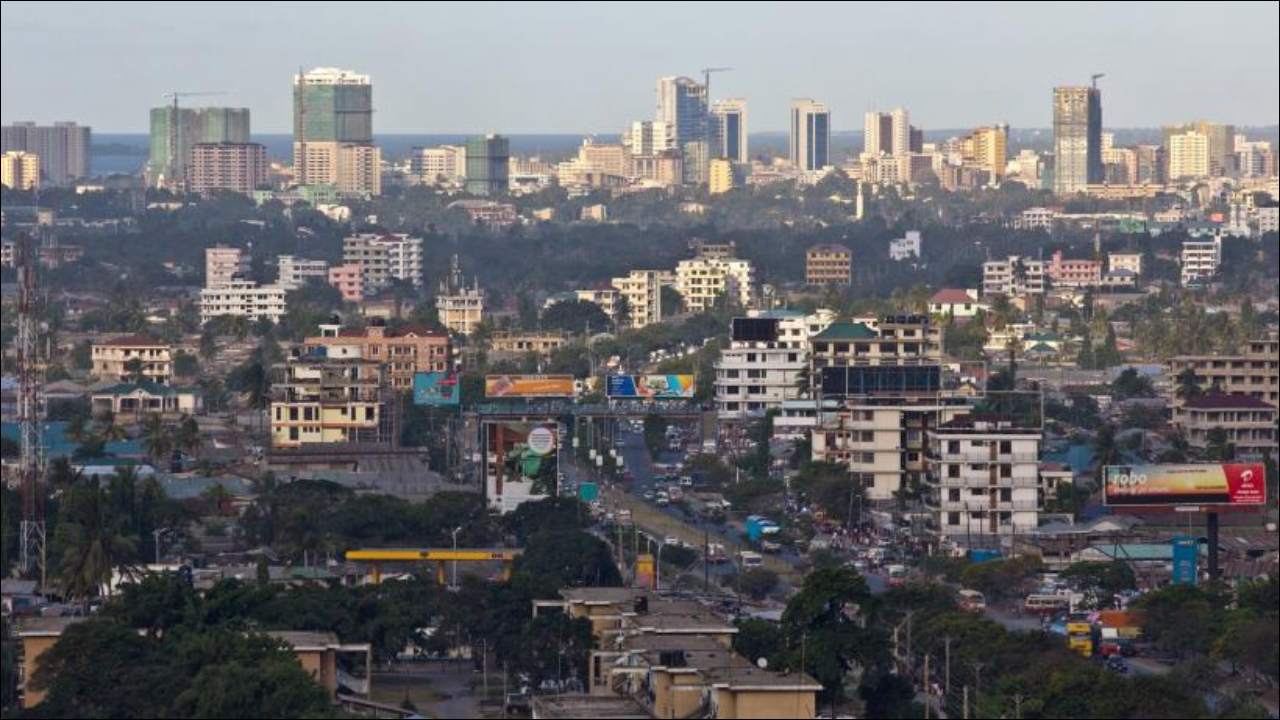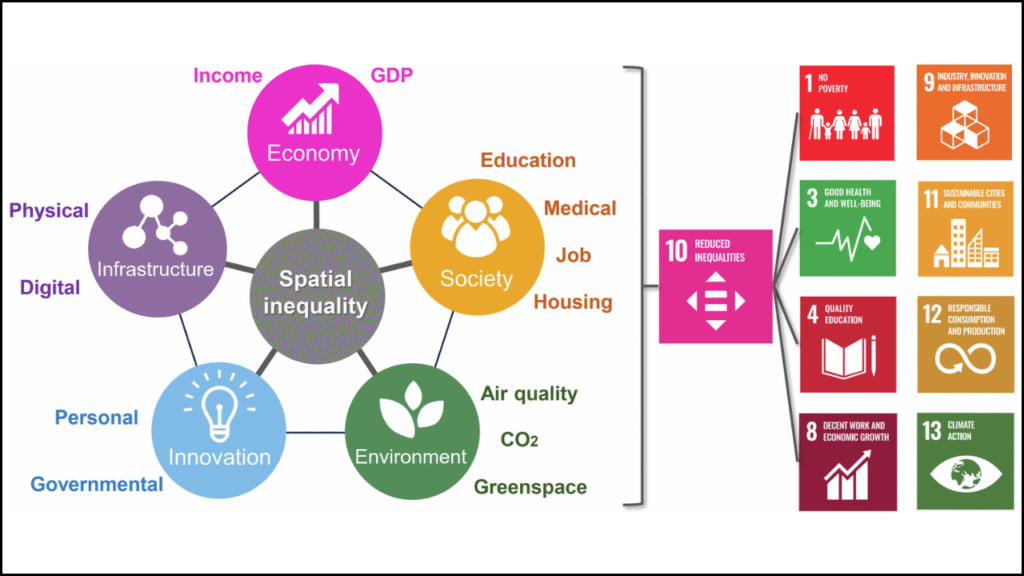
Economic development does not occur evenly across space. Some regions prosper with advanced industries and modern infrastructure, while others remain underdeveloped and marginalized. Spatial inequality refers to these differences in economic opportunity, income, and living standards between regions within a country or across countries. Understanding spatial inequality is essential for creating balanced growth, social cohesion, and effective regional policies.
Table of Contents
1. Concept of Spatial Inequality
- Spatial inequality describes disparities in economic development that arise due to geography, infrastructure, resource distribution, and policy focus.
- It encompasses gaps in income, employment, education, and access to services across different regions.
- The phenomenon is visible between urban and rural areas, coastal and inland regions, and capital cities versus peripheral zones.
- Persistent spatial inequality can limit national growth and trigger migration pressures.
2. Causes of Spatial Inequality
- Geographic Location: Proximity to trade routes, ports, or natural resources influences regional prosperity.
- Infrastructure Distribution: Unequal access to transport, energy, and communication networks widens gaps.
- Industrial Concentration: Economic activities often cluster in certain cities or regions, leaving others behind.
- Policy Bias: Governments sometimes focus on politically or economically powerful regions, neglecting smaller ones.
- Human Capital Differences: Regions with better education and health services attract skilled labor and investment.
3. Measuring Spatial Inequality
Economists use various indicators to assess regional disparities:
- Per Capita Income: Measures average income levels across regions.
- Gini Coefficient (Regional): Quantifies income inequality within and between regions.
- Human Development Index (HDI): Captures health, education, and living standards.
- Nighttime Light Data: Satellite imagery helps assess economic activity in areas lacking official statistics.
- Spatial Autocorrelation Models: Measure how economic performance in one area influences neighboring areas.
4. Urban-Rural Divide
- Urban areas typically exhibit higher productivity, wages, and access to services.
- Rural regions depend heavily on agriculture, which is more vulnerable to climatic and market fluctuations.
- Urbanization attracts human and financial capital, deepening rural underdevelopment.
- Bridging the urban-rural divide requires investments in infrastructure, technology, and rural industries.
5. Coastal vs. Inland Disparities
- Coastal regions often benefit from maritime trade, foreign investment, and industrial growth.
- Inland regions face logistical disadvantages and higher transport costs.
- Export-oriented industries cluster near ports, reinforcing coastal dominance.
- Balanced economic policies must promote inland infrastructure and diversification to reduce dependency on coastal hubs.
6. Industrial Clustering and Agglomeration Economies
- Agglomeration economies refer to the benefits firms gain from locating near each other.
- Clusters lead to innovation, shared labor markets, and supply chain efficiencies.
- However, excessive concentration can overheat certain regions and create spatial imbalance.
- Peripheral regions often struggle to attract industries due to smaller markets and weaker infrastructure.
Key Drivers of Spatial Inequality
| Driver | Description | Economic Outcome |
|---|---|---|
| Geography | Natural advantages or disadvantages due to location | Coastal prosperity vs. inland lag |
| Infrastructure | Uneven transport and energy access | High productivity in connected regions |
| Human Capital | Differences in education and health | Labor mobility and wage disparities |
| Industrial Structure | Clustering of industries in certain zones | Regional economic concentration |
| Policy and Governance | Unequal development priorities | Fiscal imbalance and political tension |
7. Migration and Labor Mobility
- Migration often acts as a response to spatial inequality.
- Workers move from poorer to richer regions seeking better opportunities.
- While migration can reduce income gaps, it also leads to depopulation and skill drain in lagging areas.
- Balanced regional policies can help retain talent by creating localized job opportunities.
8. Role of Infrastructure in Reducing Regional Gaps
- Transport, digital, and energy infrastructure are crucial for connecting marginalized regions.
- Road and rail networks integrate remote areas into national markets.
- Digital connectivity allows small businesses in rural areas to access e-commerce platforms.
- Infrastructure investment acts as a multiplier, stimulating local business and employment.
9. Education, Health, and Human Development Disparities
- Education quality varies sharply between regions, influencing long-term growth potential.
- Health services are often concentrated in urban centers, leaving rural populations underserved.
- Low human capital discourages business investment in lagging regions.
- Regional development strategies must integrate human capital enhancement with economic planning.
10. Environmental and Resource Factors
- Natural resources can both alleviate and intensify spatial inequality.
- Resource-rich regions may experience rapid growth, but others remain dependent on transfers.
- Environmental degradation disproportionately affects poorer areas reliant on natural livelihoods.
- Sustainable management ensures that development benefits are evenly distributed.
11. Fiscal and Policy Decentralization
- Centralized fiscal systems often allocate funds unevenly across regions.
- Decentralization allows local governments to tailor development programs to regional needs.
- Fiscal transfers, regional development funds, and targeted subsidies can reduce disparities.
- Effective governance and accountability ensure that resources reach intended beneficiaries.
Policy Instruments to Reduce Spatial Inequality
| Policy Instrument | Function | Expected Outcome |
|---|---|---|
| Infrastructure Investment | Improves connectivity and access | Boosts regional productivity |
| Fiscal Transfers | Provides funds to lagging regions | Reduces inter-regional imbalance |
| Education and Health Programs | Builds human capital | Enhances local economic capacity |
| Industrial Policy | Encourages regional diversification | Prevents overconcentration |
| Technology Adoption | Promotes digital inclusion | Expands market participation |
12. Global Patterns of Spatial Inequality
- Developed countries also face regional divides, such as between northern and southern Italy or east and west Germany.
- Emerging economies like China and India show stark differences between coastal and inland provinces.
- African countries often struggle with disparities between capital cities and rural hinterlands.
- Globalization tends to amplify these inequalities when regions differ in infrastructure and governance.
13. Role of Globalization and Trade
- Open trade policies benefit regions with existing industrial or logistical advantages.
- Less connected areas may experience slower growth due to limited competitiveness.
- Regional economic zones, such as ASEAN and the EU, seek to balance growth through coordinated infrastructure and investment strategies.
- Global value chains often bypass underdeveloped regions, reinforcing existing spatial divides.
14. Technological Change and Digital Divide
- Technology has the potential to bridge regional gaps but can also widen them.
- Urban centers adopt digital tools faster, attracting high-tech industries.
- Rural regions lag in broadband connectivity and digital literacy.
- Policies promoting equitable technology access help reduce digital-based spatial inequality.
15. Case Studies of Regional Disparities
- China: Rapid coastal development contrasted with slower inland progress led to large regional gaps, prompting the “Go West” policy.
- India: Southern and western states outpace northern ones due to stronger industrial and educational foundations.
- United States: Rust Belt regions declined as technology and service sectors concentrated on the coasts.
- Brazil: Wealth is concentrated in southeastern states like São Paulo, leaving the northeast underdeveloped.
16. Measuring Progress in Reducing Inequality
- Long-term monitoring uses regional GDP growth, employment rates, and access to public services.
- Satellite data and spatial econometrics offer high-resolution tools to track development outcomes.
- Evaluation frameworks like the World Bank’s Spatial Development Indicators measure connectivity and opportunity equality.
- Data-driven decision-making ensures accountability and evidence-based regional policies.
17. Challenges in Addressing Spatial Inequality
- Persistent policy neglect, limited data, and corruption hinder equitable development.
- Short-term political priorities often override long-term regional investment.
- Climate change and environmental shocks exacerbate existing inequalities.
- Integrated planning and regional cooperation remain key to sustainable solutions.
Looking Ahead
Spatial inequality reflects the uneven geography of opportunity and progress. Geography, infrastructure, and policy shape how regions participate in national and global economies. Persistent gaps weaken social cohesion and limit overall growth potential. Addressing regional disparities requires strategic investment in infrastructure, education, and governance—ensuring that prosperity is not confined to a few regions but shared equitably across the entire nation.